Budget 2026: what it means for your crypto
Two changes in Finance Bill 2026-27: 'no gain, no loss' for crypto lending and liquidity pools from April 2027, and new HMRC powers to ask crypto platforms for information.
 Sham Sadiq
· 1 min read
The government has confirmed two changes that matter for anyone holding crypto. One is good news for DeFi users. The other gives HMRC more power to ask crypto platforms about their customers. Both are going into Finance Bill 2026-27, so neither is law yet.
1. Crypto loans and liquidity pools
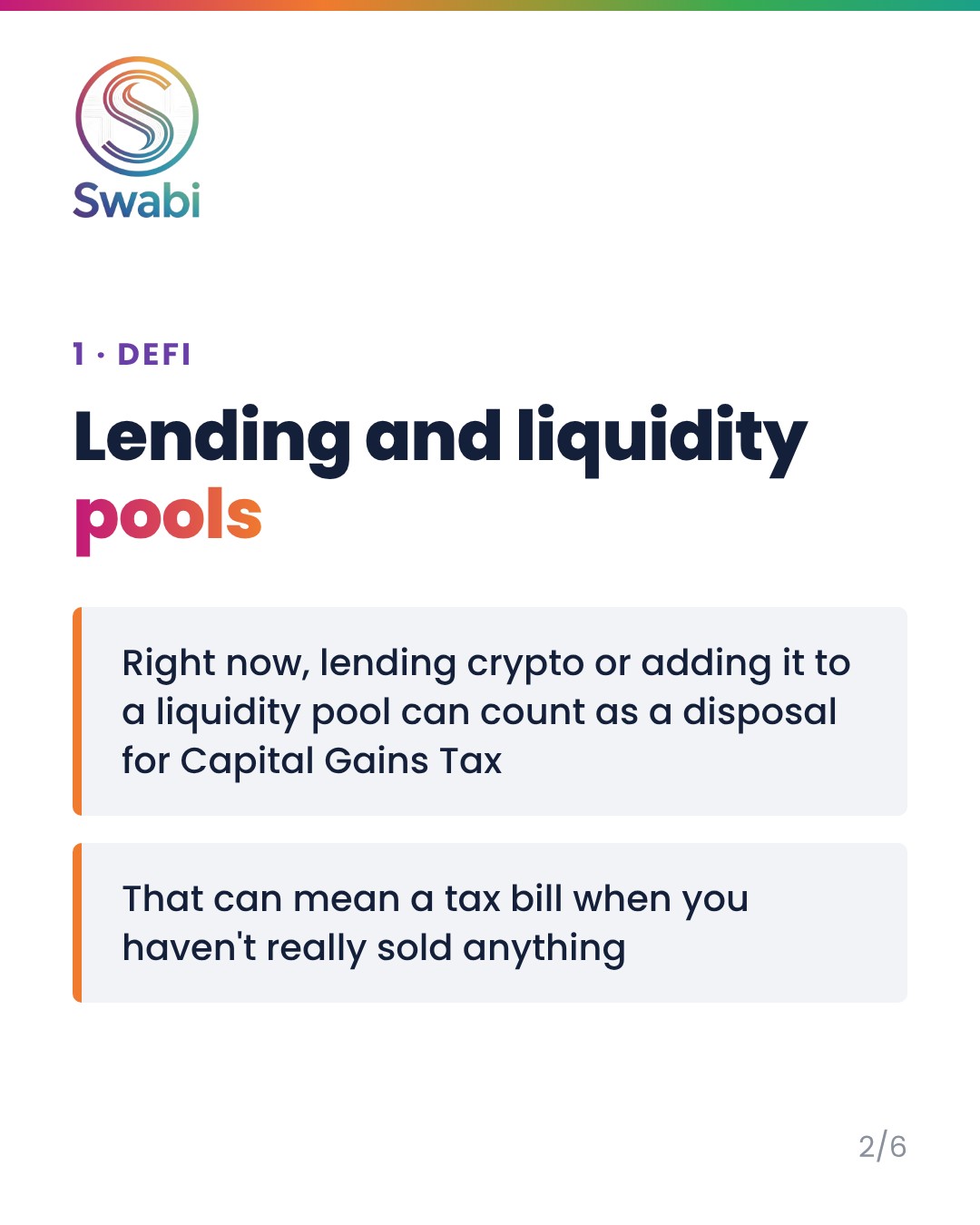
Right now, lending your crypto or adding it to a liquidity pool can count as a disposal for Capital Gains Tax. That can mean a tax bill even though you haven’t really sold anything.
As announced at Budget 2026, this will change from 6 April 2027. For individuals and trustees, certain transfers into and out of qualifying lending arrangements and liquidity pools will be treated as “no gain, no loss” until there is a real (economic) disposal.
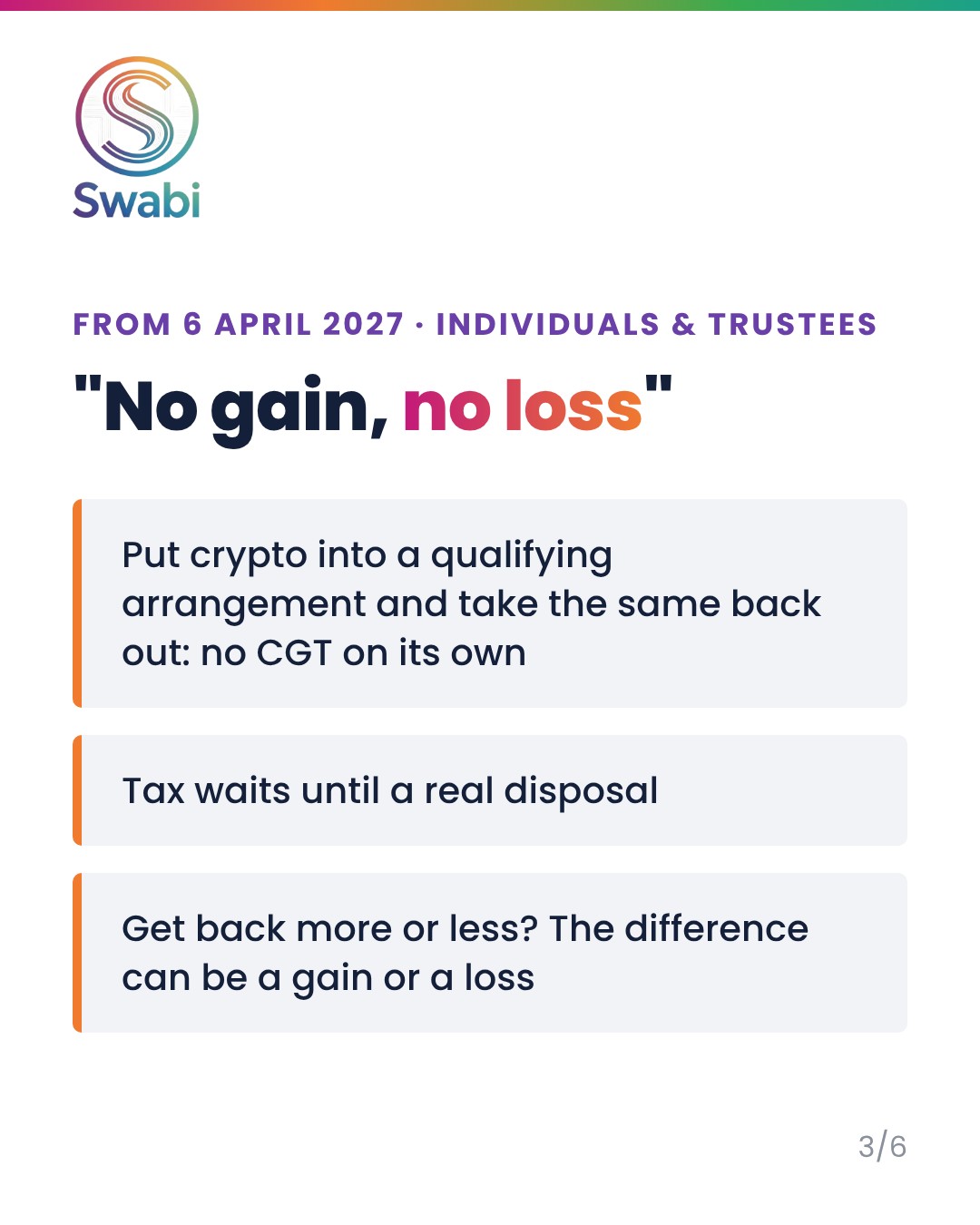
In plain English: putting crypto in and taking the same crypto back out shouldn’t trigger Capital Gains Tax on its own. If you get back more or less than you put in, the difference can still be a taxable gain or a loss.
2. HMRC can ask crypto platforms for information
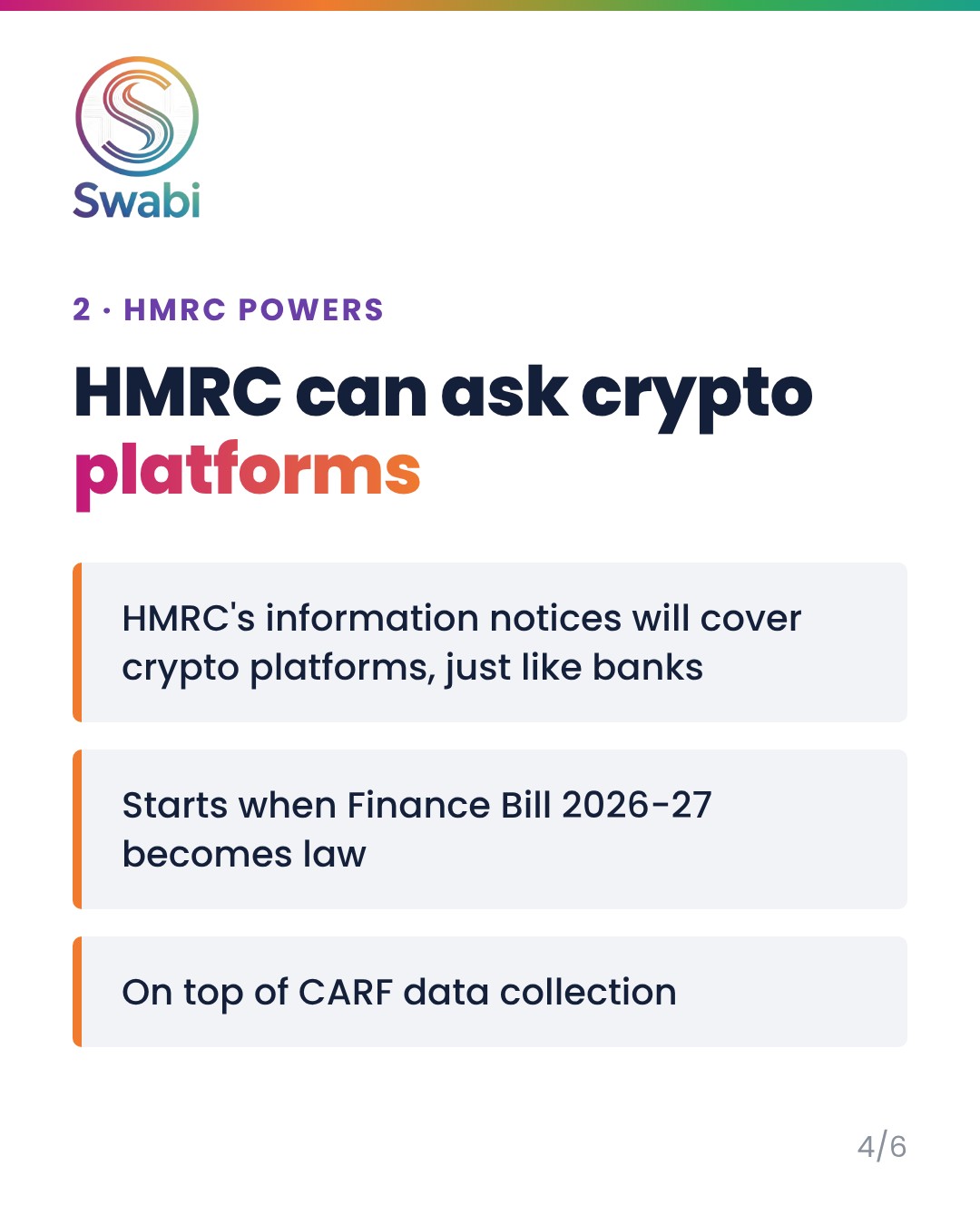
HMRC’s civil information and inspection powers are being modernised. One change expands the Financial Institution Notice, which HMRC already uses to ask banks for information about customers, to include cryptoasset service providers. This takes effect when Finance Bill 2026-27 becomes law.
That comes on top of CARF, which already has UK platforms collecting their users’ details and transactions for HMRC.
What to do now

- Used lending or liquidity pools before April 2027? The current rules still apply to those years.
- Keep records of exactly what you put in and what you took out, and when.
- Check your past returns. It is far better to put things right yourself than to wait for HMRC to ask.
Not sure how DeFi has affected your tax? Get in touch. Call or WhatsApp 07488 883219, or email contact@swabi.co.uk.
General guidance, not financial or tax advice.
Sources
This article is general information based on HMRC guidance at the time of writing and isn't personal tax advice. Rules change, so please get advice for your own circumstances.